
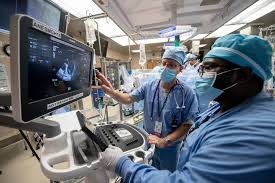
In the operating room where hearts are stopped, restarted, bypassed, and rebuilt—anaesthesiologists don’t just put patients to sleep; they orchestrate life at the edge of stillness.
Welcome to the world of cardiac anaesthesia management—where every second counts, every drug matters, and every beat is sacred.
 Scene 1: Enter the Red Zone
Unlike general surgery, cardiac surgery is no ordinary scene. Here, the patient isn’t just vulnerable—they’re temporarily handed over to the machines. In cardiac anaesthesia management, your job is to:
Maintain hemodynamic stability
Balance oxygen delivery and demand
Monitor the heart like a hawk
Predict and prevent disaster
It’s a world where adrenaline isn’t just a drug—it’s your reality.
 Scene 2: Setting the Stage – Preoperative Planning
Every masterpiece begins with planning. Before entering the OR, cardiac anaesthesia management starts with deep understanding:
Patient History: CAD, valve diseases, arrhythmias
Echo Findings: EF%, wall motion abnormalities
Investigations: ECG, labs, angiograms
Risk Stratification: EuroSCORE, STS score
This phase is not just prep—it’s strategy.
 Scene 3: Induction with Precision
In non-cardiac cases, induction is routine. But in cardiac anaesthesia management, induction is a controlled storm. Hypotension can crash a sick heart; tachycardia can cause ischemia.
Typical agents used:
Etomidate (for its cardiovascular stability)
Fentanyl (for blunt stress response)
Midazolam (for anxiolysis)
Rocuronium or Pancuronium (depending on HR)
Smooth induction is not an option—it’s a necessity.
 Scene 4: Monitoring the Invisible
Here’s where cardiac anaesthesia management shines in complexity. Standard monitors won’t suffice—you need:
Arterial Line: Beat-to-beat BP
Central Venous Line: CVP, drug access
TEE (Transesophageal Echo): Eyes inside the heart
Pulmonary Artery Catheter (sometimes): For cardiac output and wedge pressures
Your fingers may not be on the pulse, but your mind is wrapped around every waveform.
 Scene 5: The Bypass Ballet
When the surgeon shouts “Go on pump!”, everything changes. The heart is arrested, and the cardiopulmonary bypass (CPB) takes over. During this period of cardiac anaesthesia management, you must:
Monitor ACT (>480 sec)
Maintain perfusion pressure and temperature
Administer anaesthetics and muscle relaxants
Adjust electrolytes, glucose, acid-base balance
Prepare for weaning and possible inotropes
Your role is silent but life-sustaining.
 Scene 6: Weaning & Rebirth
Coming off bypass is like restarting an engine with half its parts replaced. In cardiac anaesthesia management, this moment is critical. You’ll assess:
Rhythm and contractility (via TEE)
Blood pressure and perfusion
Bleeding status (ACT, heparin reversal)
Vasoactive support (dobutamine, norepinephrine)
You may be behind the curtain, but your decisions determine the standing ovation.
 Final Note: The Heart Behind the Scene
Cardiac anaesthesia management isn’t just a subspecialty—it’s an art form. It demands calm under pressure, vigilance without rest, and an unshakable foundation in physiology, pharmacology, and technology.
At AnaesthesiaNotes.com, we celebrate the hidden hands that keep hearts beating through chaos. Explore our notes, case studies, TEE guides, and drug protocols to master the rhythm of cardiac care.