Advanced Safe Sedation Anywhere ensures patient comfort, reliable monitoring, and expert anesthesia support across diverse medical settings.

Advanced Safe Sedation Anywhere ensures patient comfort, reliable monitoring, and expert anesthesia support across diverse medical settings.
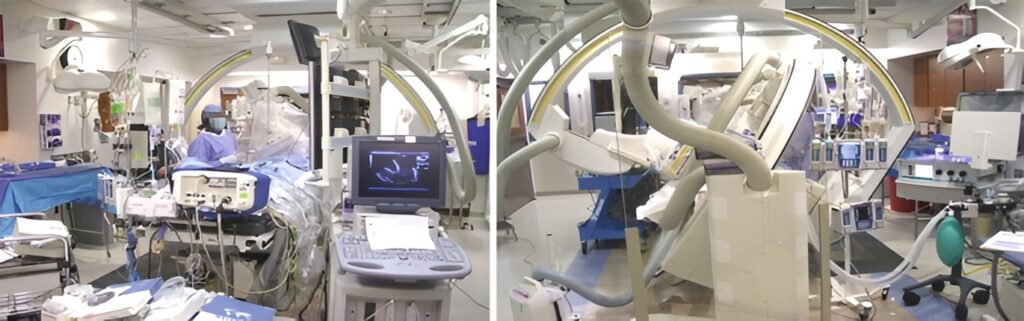
Pain and anxiety don’t always wait for the grand stage of the operating theatre.
Sometimes they appear in the quiet corners of medicine — in endoscopy suites, imaging rooms, catheterization labs, oncology centers, and emergency units — where procedures are delicate, quick, and essential, yet no less daunting.
This is where NORA steps forward.
NORA is anesthesia beyond the OR, a form of care that travels to the patient rather than the patient traveling to the operating room.
It’s the quiet art of creating safety and comfort in places never designed for surgery, turning unfamiliar spaces into havens of calm.
👉 Golden Principle:
“Right sedation, right setting, right safety — anywhere.”
Before sedatives flow or monitors blink, the clinician must first map the environment, the patient, and the demands of the procedure.
Unlike the OR — where staff, equipment, and protocols are predictable — NORA requires adaptability and anticipation.
A careful history guides the choice of sedation:
Existing medical conditions (cardiac, respiratory, neurologic risks).
Airway assessment — crucial when the procedure room is not optimized for difficult airways.
Previous anesthesia experiences or sensitivities.
Level of anxiety, pain thresholds, and procedural expectations.
Because every NORA location is different:
Is the room equipped with essential monitors (ECG, pulse oximetry, capnography)?
Is emergency equipment immediately available?
Are staff familiar with anesthesia protocols?
Is there enough space for airway management if needed?
NORA sedation isn’t “one size fits all.”
Short procedures may need light sedation.
Long or painful ones may require deep sedation or full anesthesia.
Some require complete stillness (e.g., MRI), while others demand patient cooperation.
✨ In NORA, knowing the setting is half the safety.
NORA blends pharmacology, physiology, and situational awareness into a fluid art.
A skilled anesthesia provider brings order to non-OR chaos — establishing IV access in tight hallways, managing sedation inside magnetic fields, or monitoring a pacemaker during a cardiac procedure.
Enough to calm, not enough to compromise safety.
From minimal sedation for imaging to deep sedation for endoscopy, each dose is tuned like a musical note.
NORA supports procedures where discomfort or anxiety would otherwise hinder success — biopsies, cardioversions, interventional radiology, pediatric imaging, and more.
A gentle sleep replaces fear.
A calm mind replaces tension.
A smooth awakening replaces dread.
Modern medicine has migrated many interventions out of surgery suites.
NORA makes that migration safe and seamless.
✨ In the symphony of procedural care, NORA is the quiet conductor balancing depth of sedation, patient safety, and procedural needs.
NORA is part of a broader strategy that emphasizes patient comfort, faster workflows, and reduced need for invasive anesthesia.
Most NORA patients wake quickly, recover fast, and go home sooner — enhancing efficiency and satisfaction.
NORA integrates non-pharmacologic techniques: reassurance, positioning, communication, and empathy.
By facilitating cooperation among radiologists, gastroenterologists, cardiologists, and nurses, NORA becomes a bridge between specialties.
Sedation allows procedures that might otherwise be intolerable — especially for children, anxious patients, or those with special needs.
✨ NORA turns procedural medicine into a holistic experience — where comfort is prioritized just as much as clinical success.
NORA is powerful — but it must be practiced with heightened awareness.
Grogginess or light-headedness for a short period.
Temporary lack of coordination.
Continued monitoring until alert, stable, and able to mobilize safely.
A trained escort is usually required for discharge.
High-risk airways in remote locations.
Long or complex procedures without adequate monitoring.
Limited access to emergency support.
Patients with severe cardiopulmonary disease.
Clear communication about post-sedation restrictions.
Observation for nausea, dizziness, or delayed sedation effects.
Ensuring patients do not drive, operate machinery, or make important decisions for 24 hours.
✨ With skill and vigilance, NORA transforms unfamiliar spaces into safe sanctuaries of healing.
NORA — Non-Operating Room Anaesthesia — is more than sedation outside the OR.
It is the promise that comfort and safety can travel anywhere the patient needs care.
It reflects a new era of medicine:
where procedures are broader, spaces are diverse, and the need for calm is universal.
Behind every patient who undergoes an MRI without fear, every smooth endoscopy, every comfortable cardiology intervention — stands an anesthesia provider bringing the OR’s safety to the world beyond its doors.
NORA is the quiet guardian of modern procedural medicine.
The invisible anchor of safety.
The artist of calm.
And in that gentle, reassuring silence — healing finds room to begin.
Your go-to resource for mastering anesthesia knowledge through comprehensive online MCQ exams and up-to-date study notes.
Copyright @ Anaesthesianotes-2024 . All rights are reserved. Designed By Digianalytic