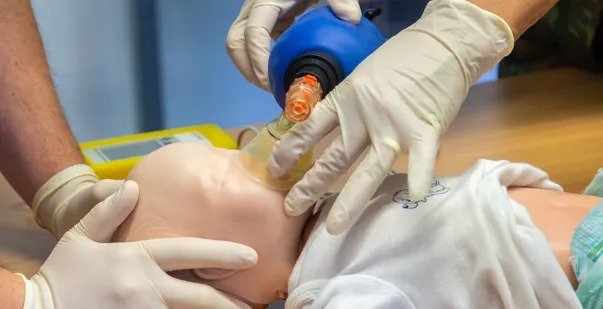
Advanced Airway Management Training

Airway Management Training Program offers structured theoretical knowledge, essential medical concepts, clinical learning, and focused education on airway anatomy, airway assessment, airway maintenance techniques, ventilation principles, and the physiological processes involved in maintaining adequate oxygenation and ventilation.

Best Airway Management Training Program provides detailed learning about airway anatomy, airway evaluation, difficult airway recognition, airway obstruction, oxygen delivery, ventilation techniques, airway devices, and the clinical principles involved in managing normal and challenging airways.

Oxygenation and Ventilation Training

The Airway Management Training Program provides comprehensive education through structured lessons, expert-led sessions, clinical discussions, case-based learning, and practical demonstrations designed to strengthen understanding of airway anatomy, airway assessment, oxygenation, ventilation, airway devices, and their clinical significance.

Airway management focuses on essential concepts related to basic airway support, difficult airway management, endotracheal intubation, supraglottic airway devices, bag-mask ventilation, emergency airway management, and airway management during anaesthesia. Understanding these techniques and their underlying physiological principles is fundamental to medical education, anaesthesia practice, emergency medicine, critical care, and effective patient care.

Advanced Airway Management Training

This training program combines detailed theoretical concepts with clinically relevant learning, helping participants understand upper and lower airway anatomy, respiratory physiology, airway assessment, oxygenation, ventilation, airway protection, and the physiological factors that influence airway management.

Understanding airway patency, upper airway obstruction, preoxygenation, bag-mask ventilation, endotracheal intubation principles, supraglottic airway devices, difficult airway algorithms, and ventilation monitoring is essential for building a strong foundation in airway management. This module helps participants develop a systematic understanding of airway evaluation and relate airway management principles to clinical practice, with emphasis on patient safety, appropriate clinical supervision, and evidence-based approaches.

Airway Management Course Topics

  • Fundamentals of Airway Management

  • Anatomy and Physiology of the Respiratory System

  • Upper and Lower Airway Anatomy

  • Airway Assessment and Clinical Evaluation

  • Identification of Difficult Airways

  • Airway Obstruction and Recognition of Respiratory Emergencies

  • Basic Airway Maintenance Techniques

  • Airway Positioning and Opening Manoeuvres

  • Bag-Mask Ventilation Principles

  • Oxygen Delivery and Preoxygenation

  • Supraglottic Airway Devices

  • Endotracheal Intubation Principles

Airway Management Training Eligibility
  • Medical students seeking foundational airway management knowledge

  • Anaesthesiology postgraduate students

  • Practising anaesthesiologists interested in strengthening airway knowledge

  • Doctors seeking to improve airway assessment skills

  • Emergency medicine postgraduate students and practitioners

  • Critical care medical professionals

  • Nursing students and qualified nursing professionals

  • Healthcare professionals involved in perioperative patient care

  • Medical professionals interested in respiratory emergency management

  • Clinicians seeking knowledge of difficult airway assessment

  • Healthcare practitioners interested in anaesthesia and ventilation principles

  • Candidates with relevant medical or healthcare qualifications

  • Learners meeting the program’s specific eligibility requirements

Airway Management Training for Medical Professionals

Airway Management Training Program equips medical and healthcare professionals with comprehensive knowledge of respiratory anatomy, airway physiology, airway assessment, difficult airway recognition, oxygenation techniques, bag-mask ventilation principles, supraglottic airway devices, endotracheal intubation concepts, ventilation monitoring, and patient safety considerations. This foundational learning helps participants strengthen their understanding of airway-related emergencies, airway management equipment, clinical assessment, and evidence-based decision-making, supporting further medical education and supervised clinical learning. The program also introduces airway management principles relevant to anaesthesia, emergency medicine, and critical care, helping eligible healthcare professionals build a stronger foundation for their respective clinical roles. Practical airway procedures should be performed only by appropriately trained professionals under suitable clinical supervision and according to institutional protocols.

Clinical Airway Management Training

Airway Management Training provides medical students, anaesthesiology postgraduates, practising anaesthesiologists, nursing students, emergency medicine professionals, and healthcare practitioners with comprehensive knowledge of airway assessment, airway management techniques, ventilation principles, and patient safety. These concepts are essential for understanding respiratory emergencies, supporting effective clinical assessment, and strengthening foundational knowledge for anaesthesia and emergency care. A comprehensive Airway Management Training Program offers systematic learning, visual demonstrations, case-based discussions, and clinically relevant concepts to improve understanding of airway management principles and clinical decision-making.

Airway Management for Anaesthesia Residents
  • Direct and Video Laryngoscopy Concepts

  • Difficult Airway Management Strategies

  • Emergency Airway Management Principles

  • Airway Management During General Anaesthesia

  • Rapid Sequence Intubation Concepts

  • Ventilation Principles and Respiratory Monitoring

  • Airway Management in Paediatric Patients

  • Airway Considerations in Special Patient Populations

  • Recognition and Management Principles for Airway Complications

  • Extubation Principles and Postoperative Airway Care

  • Airway Management Equipment and Device Familiarisation

  • Clinical Case Discussions and Airway Management Planning

  • Patient Safety and Evidence-Based Airway Practices