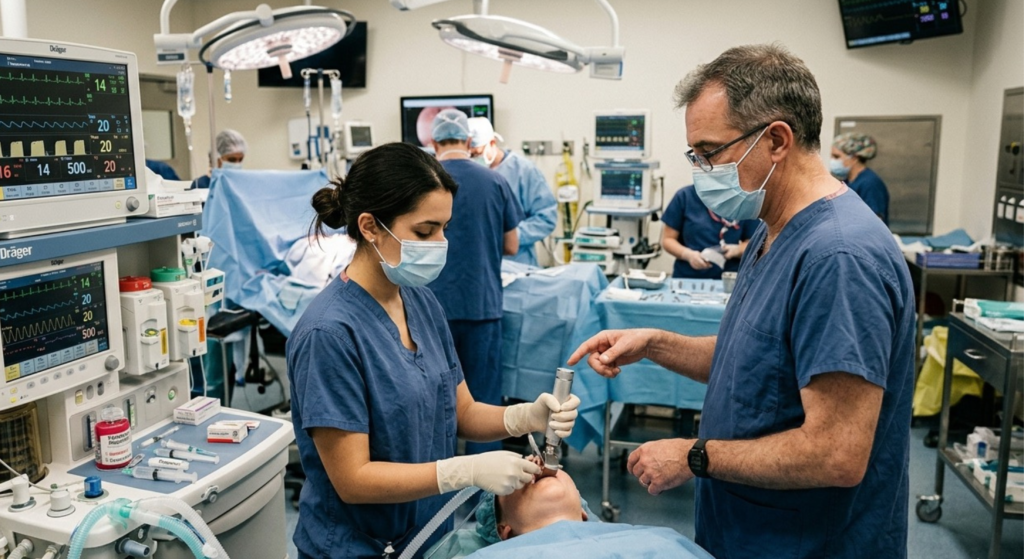
Complete Guide to Mastering Anaesthesia Concepts

Complete Guide to Mastering Anaesthesia Concepts

Complete guide to mastering anaesthesia concepts with key principles, clinical insights, and effective study strategies for success.

Anaesthesia training with structured learning, concept clarity, clinical application, and exam-focused preparation helps medical professionals develop confidence in both theoretical knowledge and practical skills required for safe anaesthesia practice.

Basics of Mastering Anaesthesia Concepts

This comprehensive anaesthesia learning program is designed to build strong foundational knowledge and gradually advance toward complex clinical concepts. It includes case-based discussions, updated clinical guidelines, expert insights, and practical approaches essential for mastering anaesthesia.

Anaesthesia is a critical branch of medicine focused on patient safety, perioperative care, pain management, and life-support techniques. A strong understanding of anaesthesia ensures effective clinical decision-making and improved patient outcomes.

Fundamental Principles of Anaesthesia Concepts

This program aims to bridge the gap between basic concepts and advanced clinical practice by integrating theoretical knowledge with real-world application. It focuses on safe, ethical, and evidence-based anaesthesia practice aligned with modern healthcare standards.

General anaesthesia drugs and techniques

Basic Principles of Anaesthesia

Fundamentals including types of anaesthesia, stages, monitoring, and patient safety.

Airway Management

Techniques for airway assessment, intubation, ventilation, and emergency airway handling.

Anaesthesia Equipment & Machines

Understanding anaesthesia workstations, ventilators, circuits, and safety checks.

Pharmacology in Anaesthesia

Drugs used in anaesthesia including sedatives, analgesics, muscle relaxants, and inhalational agents.

Regional Anaesthesia

Spinal, epidural, and peripheral nerve blocks with indications and techniques.

General Anaesthesia Techniques

Induction, maintenance, and recovery with patient monitoring and complication management.

Cardiovascular & Respiratory Physiology

Clinical relevance of physiology in anaesthesia practice and patient monitoring.

Neuroanaesthesia

Anaesthesia considerations in neurosurgical procedures and brain physiology.

Obstetric Anaesthesia

Pain management and anaesthesia techniques in pregnancy and labor.

Pediatric Anaesthesia

Special considerations in infants and children undergoing surgery.

Pain Management

Acute and chronic pain management strategies in clinical practice.

Critical Care & Emergency Management

Management of critically ill patients, ICU care, and life-saving interventions.

Best Clinical Skills & Practical Focus

• Patient preoperative evaluation and risk assessment
• Safe anaesthesia planning and execution
• Monitoring vital parameters during procedures
• Airway management and emergency response
• Drug selection and dosage calculation
• Managing complications and critical situations
• Case-based clinical discussions
• Postoperative care and pain management

Professional Training for Anaesthesia Mastery

This program is designed for:

Medical Students
Intern Doctors
Postgraduate Medical Students
Practicing Doctors
Nursing Professionals
Healthcare professionals involved in perioperative care

AdvanceTraining Eligibility Criteria

Eligibility includes:

Recognized medical or healthcare qualification
Basic understanding of medical sciences
Interest in anaesthesia and critical care
Commitment to clinical learning and patient safety

Benefits of Anaesthesia Learning Program

This program helps learners progress from basic understanding to advanced clinical expertise. It enhances confidence in anaesthesia practice, improves patient safety, strengthens clinical decision-making, and prepares candidates for exams and real-world medical challenges.